


Investment Strategies
The AI Story, Concentration Risk And Shrewd Positioning – A UBP Panel Discussion
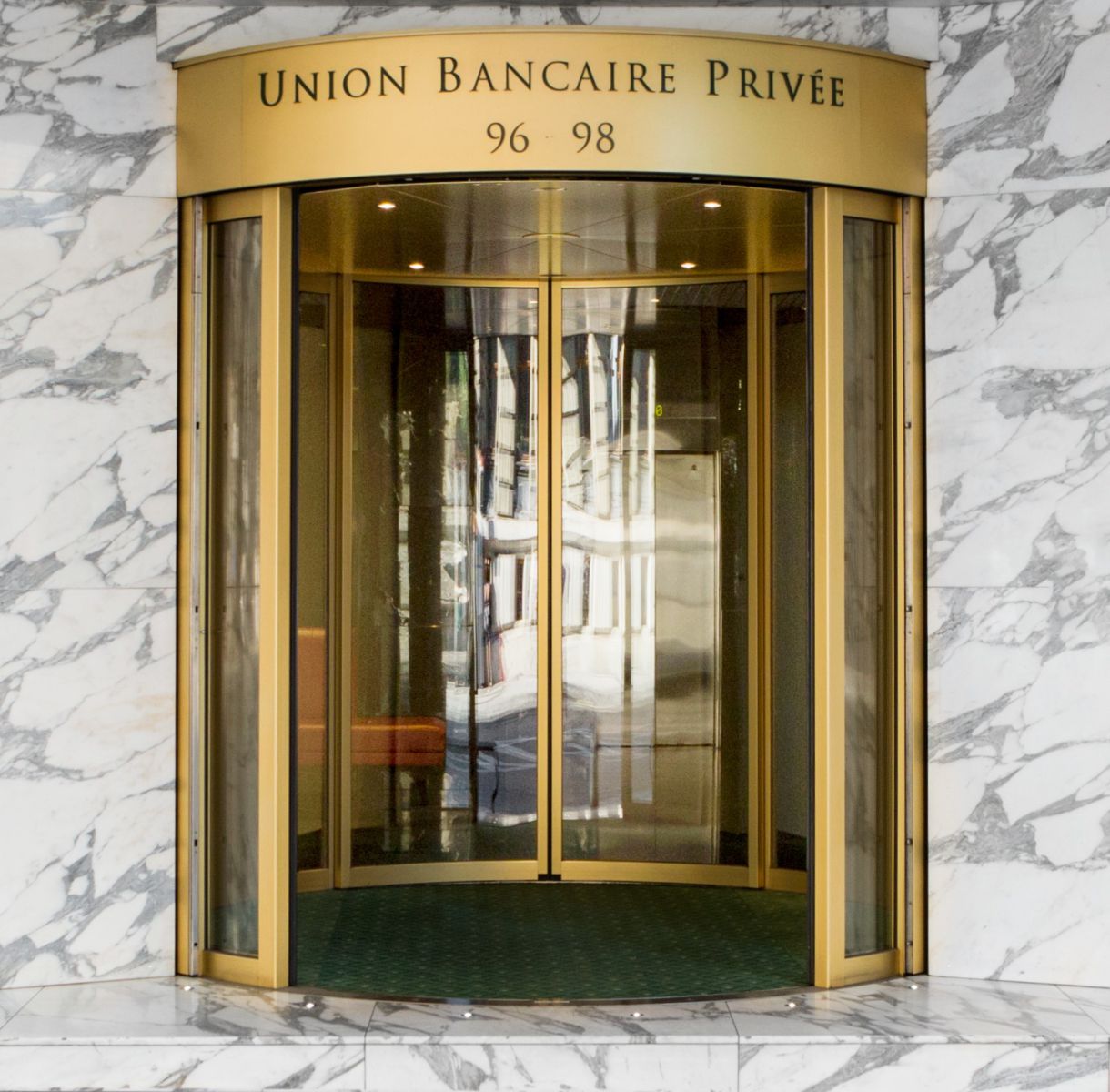
The Swiss private bank, which says it remains positive on US equities and tech, held a panel discussion in London to examine issues such as AI's impact, concentration risks in equities, and the perspectives of the fixed income side.
Concentration risk is on wealth advisors’ minds right now after
the SpaceX IPO and the giddy ascent of AI-linked tech
stocks.
A challenge for investors is how to pivot rapidly when the days
of capturing this market “Beta” need to be replaced by the
search for superior returns, or “Alpha”, panellists at a media
event, hosted by Union
Bancaire Privée, heard this week.
The S&P 500 Index of US stocks is more concentrated than at
any point since the late-1990s tech bubble and the 10 largest
stocks, such as Microsoft, Apple, NVIDIA, Amazon, Alphabet, and
Meta, account for almost 40 per cent of the index’s total market
capitalization. In a 17 June note, another Swiss bank, UBS,
pointed out that the comparable concentration was about 25 per
cent during the 1990s dot-com era and just 15 per cent in
1980.
Average correlations within strategies linked to AI businesses
are as high as 0.8, Joe Kelly, partner at Campbell & Company,
said in the panel discussion, held in London’s Mayfair district.
(Campbell is a US-based systematic investment manager that has
partnered with UBP to offer liquid alternative strategies.)
[The question] is “how to pivot away from the Beta in AI to the
Alpha in that?” Kelly said.
“Clients are really happy and their portfolios are doing
marvellously but the risks of loading [up] from these are greater
and greater,” Kelly continued.
Spencer Waxman, founder and portfolio manager at Shannon Rival
Capital Management, speaking on the same panel, said the
AI-influenced equity cycle and other cycles shared the common
feature of customer concentration. “You have a handful of
companies that are doing the spending,” he said, wondering what
will happen if one of the larger players hits trouble. (Shannon
is a New York-based hedge fund.)
The market at present appears to take a “black and white” view of
AI-related stocks: it is either optimistic or the reverse, Waxman
said.
Positions
The Geneva-headquartered bank recently set out its hedge fund
strategy views for June. It remains positive on US equities and
technology, but is not chasing the rally in stocks; it has
upgraded its position on utilities; it is constructive on the
dollar and has trimmed dollar hedges in non-dollar portfolios,
and has slightly cut its tactical stance on gold. UBP says a
reopening of the Strait of Hormuz will be a trigger for broader
market participation, particularly benefiting European
stocks.
UBP invests $19 billion in alternative investments,
including hedge funds.
Don Morgan, chief investment officer and founder of Brigade Asset
Management, said his focus on the fixed income side meant that he
tends to concentrate on protecting clients’ capital rather than
trying to find the upside, apart from certain cases.
“On the long side we need to work out who benefits from that,” he
said, alluding to the idea of holding an AI-related bond on the
expectation that it will appreciate.
Sector-wise, one sector that looks to benefit from AI, and create
opportunities for his approach, is healthcare, Morgan said. To
succeed in the fixed income area where AI is part of the mix,
Morgan said “you need to be in liquid funds so that you can
pivot.”
“For credit investors, AI is more risk…we are playing it through
utilities, copper and healthcare,” he said. (Brigade Capital
Management partners with UBP.)
Morgan said that in the current environment, as far as credit
investors are concerned, “the time is not to take too much
risk…there will be a dislocation”.
In the near term, the AI story, given demands on energy, rare
earths and manufacturing capacity, is likely to be inflationary,
but will be deflationary further ahead as efficiencies and
consolidation kick in, as happened with the earlier iterations of
the computer age, he said.
Brian Hessel, chief operating officer, chief credit risk officer
and co-founder of Global Credit Advisers, talked about credit
cycles and what opportunities AI might offer. Credit yield
spreads are tight now and there are not many opportunities for
long-positioned investors.
“There will be a time when you are able to short some of this,”
Hessel added.